As an Amazon Associate I earn from qualifying purchases.
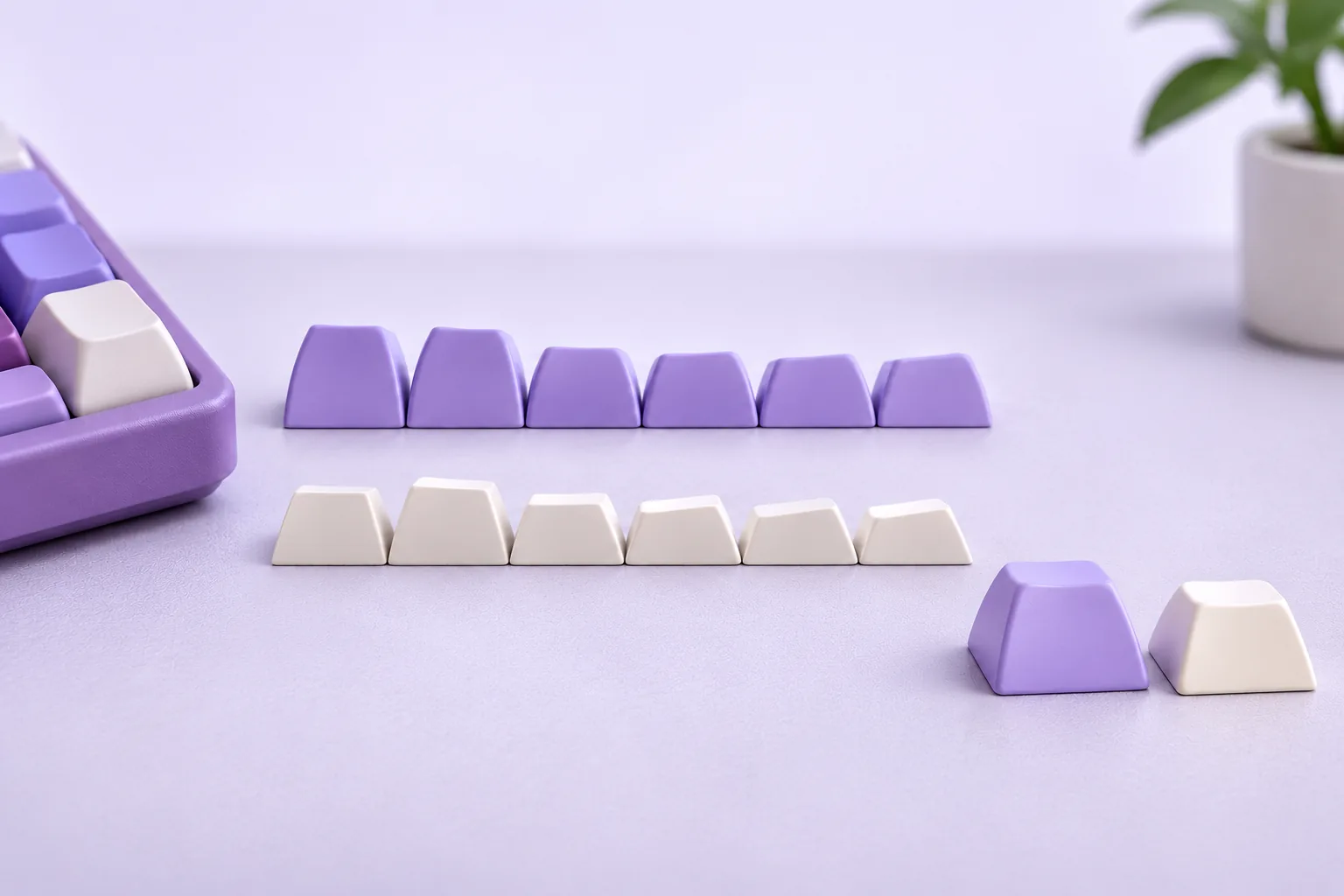
Akko describes ASA as a medium-height profile with rounder, more curved tops, and says it is slightly taller and more curved than Cherry. Cherry has a more visibly differentiated row sculpt, including a low-profile description for R2 and R3 and a taller, angled R4. Akko also publishes an older chart with millimeter callouts beside profile drawings. Those labels are useful evidence, but the chart does not define its measurement endpoints, so they should not be treated as one standardized height for either profile. Neither source proves that one profile is more comfortable, quieter, or faster to type on.
Choose Cherry if you prefer Akko’s documented lower, less rounded contour; choose ASA if you want the rounder, generally taller contour Akko describes. Treat that as a preference-based starting point, not a universal performance verdict. The qualitative comparison comes from Akko’s profile guide; its separate profile-comparison FAQ provides the dimension chart.
How the profiles differ
| Detail | Cherry | ASA |
|---|---|---|
| Overall description | Sculpted profile with four distinct row heights, R1–R4 | Medium height, sculpted similarly to OEM, with rounder and more curved tops |
| Row shape noted by Akko | R2 and R3 are slightly slanted and described as low-profile; R4 is taller and angled for the bottom row | Distinct row heights; rows are described as slightly taller and more curved than Cherry |
| Qualitative takeaway | More differentiated sculpt; Akko describes some middle rows as low-profile | Akko describes a rounder, more curved shape and a slightly taller profile than Cherry |
Akko’s older FAQ includes the following row-labeled dimension callouts (millimeters):
| Row label | Cherry value printed in chart | ASA values printed in chart |
|---|---|---|
| R1 | 9.81 mm | 9.19 mm / 10.65 mm |
| R2 | 7.85 mm | 8.97 mm / 9.65 mm |
| R3 | 7.22 mm | 10.03 mm / 10.35 mm |
| R4 | 8.59 mm | 11.81 mm / 11.9 mm |
These are the visible values Akko prints beside the corresponding row drawings, not measurements taken for this article. The ASA drawings show two vertical callouts for a row while the Cherry drawings show one; the FAQ does not explain the measurement endpoints or how the two sides map to a like-for-like measurement. This makes the chart useful for seeing Akko’s illustrated row dimensions, but not for calculating a single profile height or a precise average. Keep the chart’s figures separate from the prose guide’s qualitative statement that ASA is slightly taller and more curved.
The shape description also does not establish how the caps feel to every typist. Hand size, posture, board angle, and personal preference matter, and the sources do not report a controlled typing comparison. If the exact feel is decisive, compare the actual caps in person rather than assuming every set bearing the same profile name will feel identical.
Which one should you choose?
Pick Cherry when you want the shape Akko describes as having lower R2/R3 rows and a distinct taller, angled R4. If you already like a Cherry set you own, that hands-on experience is more useful than assuming every set labeled Cherry feels identical. Akko’s profile guide describes a profile family, while individual keycap sets can differ in materials and kit contents.
Pick ASA when Akko’s medium-height, rounder and more curved description matches what you want. If a fuller, rounded top shape appeals to you, ASA is the profile to inspect first. The available evidence supports that shape description; it does not support claims that ASA necessarily improves comfort, accuracy, or typing speed.
If you are unsure, look at a side view or handle a sample set before replacing all your caps. Profile names are useful labels, but they are not substitutes for a physical comparison when your decision depends on how a key feels under your fingers.
Profile is not the same as kit compatibility
A profile tells you about keycap shape and row sculpt. It does not tell you whether a particular kit has the right number of keys, widths, or layout coverage for your keyboard. Two product examples show why those checks need to stay separate:
- Akko’s ASA Shine-Through Keycap Set is described as a PBT double-shot, shine-through ASA set, and its page lists support for major keyboard layouts from 60% through full-size. Those are claims about that product’s set and listed coverage, not every ASA kit.
- Akko’s 68-key Cherry-profile keycap set is specifically presented for 65% US-ANSI layouts. Its stated key count and intended layout do not establish compatibility with every 65% board, much less every Cherry-profile set.
Before ordering, compare the exact kit’s layout diagram with your keyboard. Check the spacebar, right Shift, bottom-row key widths, and any unusual keys. Confirm the switch stem type separately; profile alone does not establish stem fit. For the broader Akko-specific checklist covering layout, stem, and key-unit fit, see our Akko keycap compatibility guide.
A simple decision rule
Use Akko’s documented shape as the deciding preference: Cherry for its lower-described R2/R3 and more differentiated sculpt; ASA for a medium-height shape with rounder tops that Akko describes as slightly taller and more curved. Then verify the exact set’s layout, key widths, and stem fit against your board. If comfort or sound is the deciding factor, neither label alone answers it—try the actual caps or look for a controlled comparison of the specific sets you are considering.